
The Ganga's rising water level is causing significant flooding in Bihar and Uttar Pradesh districts.

India recorded 125 extremely heavy rainfall events during September and October of 2021, the highest in five years, owing to late withdrawal of the southwest monsoon and higher-than-normal low-pressure systems, India Meteorological Department (IMD) said on Tuesday.

Indians across the country welcomed the New Year 2026 with celebrations, religious observances, and gatherings at tourist spots. The President, Vice President, and Prime Minister extended greetings for peace and prosperity.

IMD data shows in the 24 hours between September 1 and 2, Haryana received 806 per cent more rainfall than normal, Punjab 759 per cent, Himachal Pradesh 510 per cent, Delhi 740 per cent, Chandigarh a staggering 1,638 per cent, and Rajasthan 193 per cent.

Heavy rains across India have led to widespread flooding, causing damage to infrastructure, displacement of residents, and disruption of normal life. Rescue efforts are underway in affected areas.

The India meteorological department said heatwave conditions will persist for at least two more days.

Incessant rainfall in Uttar Pradesh has caused floods in 13 districts, with major rivers like Ganga and Yamuna exceeding danger levels. Varanasi, Prayagraj, and other cities are severely affected, leading to displacement and disruption of daily life.

Very light rains and thundershowers occurred at isolated places in Uttar Pradesh though, and a fresh warning of heavy showers was issued in Himachal Pradesh as the India Meteorological Department (IMD) said heavy to very heavy rainfall is likely in several parts of the country, including the northern region, over the next six-seven days.
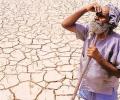
The death toll included over 450 from intense heat wave last summer, according to the World Meteorological Organization.

Several deaths were reported across the country due to rain-related incidents like lightning strikes and drowning.
India is expected to experience hotter-than-usual temperatures from April to June, with more heatwave days in central and eastern India and the northwestern plains, the IMD said. Most parts of the country will see higher-than-normal maximum temperatures, except for some areas in western and eastern India where the temperatures are expected to be normal. Minimum temperatures will also be above normal in most regions. The IMD has warned that landslides could occur in parts of Kerala and Karnataka in the Western Ghats and that northeastern states might face flooding in April.

A three-hour heavy downpour accompanied by a dust storm hit Delhi-NCR early morning on Friday, causing flight delays and traffic disruptions as seven people were killed in rain-related incidents across north India.

The India Meteorological Department (IMD) has predicted above-normal rainfall for the upcoming monsoon season in India (June to September). The cumulative rainfall is estimated to be 105 percent of the long-period average. The IMD has also ruled out the possibility of El Nino conditions during the entire season. The monsoon is crucial for India's agriculture sector, which supports the livelihood of a significant portion of the population and contributes substantially to the country's GDP. However, while the prediction of normal rainfall brings relief, climate change is expected to cause variations in rainfall distribution.

Heavy rainfall across North India leads to fatalities, structural damage, travel disruptions, and school closures. Eastern states brace for more rain.
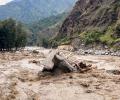
While two bodies were recovered on Wednesday, the death toll climbed to four on Thursday after the recovery of two more bodies from the Indira Priyadarshini Hydroelectric project site in Kangra district.

A massive landslide struck the old track to the Vaishno Devi shrine in Reasi district of Jammu and Kashmir on Monday, leaving one pilgrim dead and 10 others injured, officials said.

The weather department attributed the unusual heat to the lack of rainfall due to the absence of active western disturbances over north India and any major system over south India.

The labourers, who are said to be of Nepali origin, were engaged in the construction of a hotel.

For Tuesday, the IMD said heavy to very heavy rains, with extremely heavy rainfall at isolated places, are likely over Assam and Meghalaya.
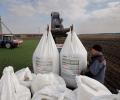
'China reduced its exports of urea to India gradually.' 'In 2020-2021 we imported 28 lakh tonnes of urea which reduced to 16 lakh tonnes in 2022-2023 and that has now reduced to 1 lakh tonnes in 2024-2025.'

East and northeast India recorded 29 per cent rain deficit -- 141.5 mm against the normal of 199.9 mm -- from March 1 to May 3.

Rising Yamuna River levels flood low-lying areas of Delhi, displacing residents and disrupting businesses. Families struggle with loss of homes and livelihoods.

Two women pilgrims from Punjab and Uttar Pradesh died while a five-year-old girl was grievously injured in a landslide on the new track to the Vaishno Devi shrine in Jammu and Kashmir's Reasi district on Monday, officials said.

A record 119.3 mm rainfall pounded Delhi under the impact of cyclonic storm Tauktae and a western disturbance in 24 hours ending 8:30 am on Thursday, breaking all the previous records for May, the IMD said on Thursday.

After record rains wreaked havoc in Jammu and Kashmir over the past two days, the death toll in related incidents rose to 41, most of them victims of the landslide on a Vaishno Devi pilgrimage route, while there was some let-up in the showers on Wednesday, allowing relief efforts to pick up pace.

ISRO has projected wheat production of 122.24 million tonnes.

Overall profitability in the agriculture sector is expected to be marginally higher at the pan-India level in the 2024-25 kharif season, driven largely by higher production and low input cost, but offset by the declining price of some produce, according to a report released by Motilal Oswal Financial Services Ltd on Wednesday. The report said that region-wise farm profitability in the northern belt was expected to be relatively better than in the southern belt, while the eastern and western belts presented a mixed bag.

The city also recorded a maximum temperature of 23.8 degrees Celsius, 16 notches below normal and the lowest in the month of May since 1951, the IMD said.

Just two days after recording 811.6 mm of rainfall in a day, Cherrapunji in Meghalaya received a bountiful 972 mm of precipitation in 24 hours ending 8.30 am on Friday, the highest in June since 1995 and the third highest in 122 years, the India Meteorological Department (IMD) said.

By now, monsoon should have reached the central India, including parts of Madhya Pradesh, Rajasthan, eastern Uttar Pradesh and Gujarat, but it is yet to reach Maharashtra.

Heavy rain in the first week of July compensated for the shortfall but caused flooding in many northeastern states.
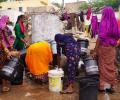
In Rajasthan's Karauli district, a decade ago, rampant drought and dwindling water sources forced many men into a life of dacoity, leaving their families in fear. However, the women of Karauli, tired of the despair, took matters into their own hands. They persuaded their husbands to give up their lives of crime and together they began reviving old water bodies and constructing new ones with the help of a local NGO. This community-led effort, which included building pokhars (water bodies) and reviving the Serni River, resulted in a remarkable transformation, bringing stability and hope to the region, and turning former dacoits into thriving farmers.

India will receive normal monsoon this season, country's meteorological department said on Wednesday in its forecast for the Southwest monsoon that covers 75 per cent of the country, and thereby may bring much-needed respite to the economy, which is reeling under the catastrophic effect of the Covid-19 pandemic.

The south-west monsoon on Tuesday started withdrawing from parts of south-west Rajasthan and adjoining Kutch in Gujarat, with at least eight states, including rice bowl states of Uttar Pradesh and Bihar reporting deficient rains. It was for the first time since 2016 that the monsoon started withdrawing in the third week of September. "Southwest monsoon has withdrawn from parts of southwest Rajasthan & adjoining Kutch today, against its normal date of withdrawal from southwest Rajasthan of September 17," the India Meteorological Department (IMD) tweeted.

The weather office said intensity of heat wave/severe heat wave has slightly reduced over some parts of northwest and adjoining central India.

The southwest monsoon is set to make its exit in style, bringing rains to the parched parts of Uttar Pradesh and Bihar, as weather forecasters have picked up signs of formation of a cyclonic circulation over Bay of Bengal. Addressing a press conference in New Delhi, India Meteorological Department (IMD) director general Mrutyunjay Mohapatra on Thursday junked last week's forecast of early withdrawal of southwest monsoon and announced the extended stay of the seasonal showers. "Even though we expected early withdrawal of the southwest monsoon, a cyclonic circulation over west-central and adjoining northwest Bay of Bengal will shift the monsoon trough southwards around September 7.

The threshold for a heat wave is met when the maximum temperature of a weather station reaches at least 40 degrees Celsius in the plains, 37 degrees in coastal areas, and 30 degrees in hilly regions, and the departure from normal is at least 4.5 notches.

At least 28 people died in rain-related incidents Sunday as heavy downpours lashed north and northwest India, causing landslides, traffic chaos and house collapses, as well as a dam breach which inundated several villages in Haryana.

A group of retired forest officers has written to Prime Minister Narendra Modi demanding the immediate scrapping of the 10,000-acre safari project in Haryana's Aravallis, arguing that it will harm the environment and wildlife. They highlight the "alarming destruction" of the Aravallis due to mining, quarrying, real estate development, and deforestation, and warn that the project could disturb aquifers crucial for water-starved districts. The retired officers also emphasize the importance of protecting the Aravallis, which is the only significant forest cover in Haryana, for its role in restoring humidity and rainfall in the region.

Lakhs of voters will have to bear the searing heat when they step out to exercise their franchise in the second phase of the Lok Sabha elections on Friday.
